The Addictions Academy

Become A Nationally Certified Narcissist Abuse Coach

Internationally Accredited no prior-experience required Fast-Track Online Certification

A comprehensive, trauma-informed certification for coaches and professionals ready to work with survivors of narcissistic abuse with clinical grounding, ethical clarity, and practical skills to do it.

Format
Self-Paced Online
Continuing Education
26 Credit Hours Available
Includes
Manuals & Exam Fees

program overview

The Most Comprehensive Narcissist Abuse Coaching Certification Available.

The Certified Narcissist Abuse Coach (NCNAC) program is a trauma-informed certification built for coaches, clinicians, and helping professionals who want to confidently guide clients through the aftermath of narcissistic abuse.

You’ll learn how to recognize narcissistic patterns, identify the underlying dynamics of control, and coach clients through recovery not just conceptually, but in a way that holds up inside real conversations and real sessions.

Most training stops at awareness. This program teaches application.

Inside, you’ll break down the core manipulation patterns: love bombing, gaslighting, blame-shifting, exploitation and learn how to respond to each with a clear coaching strategy.

Whether you’re expanding an existing practice or stepping into this work for the first time, the NCNAC certification positions you to operate with confidence, credibility, and precision in one of the fastest-growing and most needed coaching niches today.

— Core Competencies

What You Will Be Equipped To Do

Each module addresses the real mechanics of narcissist abuse dynamics, survivor psychology, and practical coaching application.

01

Recognize Abuse Patterns Without Diagnosing

  • Distinguish narcissistic patterns from borderline, antisocial, histrionic, and covert presentations
  • Identify the abuse cycle: idealization, devaluation, discard, and hoovering across romantic, family, and professional contexts
  • Use behavioral language rather than diagnostic labels: the "legal shield" of ethical coaching
  • Guide clients from "Are they a narcissist?" toward "What is this pattern doing to me?"
02

Apply Coaching Counter-Strategies to Manipulation

  • Teach clients "Fact Files" to anchor reality when gaslighting erodes memory and self-trust
  • Coach the "Return to Sender" exercise for projection and unearned shame
  • Use "Radical Indifference" and the Counter-Community model against smear campaigns
  • Help clients shift from Target to Observer: pattern recognition over personal reactivity
03

Understand the Neurobiology of Staying

  • Explain intermittent reinforcement as the "gambler's logic": dopamine, not love, driving the bond
  • Walk clients through the 7 stages of trauma bonding with clinical accuracy
  • Distinguish between the trauma bond and healthy attachment at a neurological level
  • Frame "Why didn't you just leave?" as the wrong question and replace it with the right one
04

Coach Strategic Disengagement

  • Distinguish No Contact, Low Contact, Gray Rock, and Yellow Rock and when each applies
  • Teach the B.I.F.F. Response Framework for high-conflict written communication
  • Prepare clients for the Hoover with a pre-decided response protocol before it arrives
  • Build the "Need-to-Know" circle and coach the information diet with high-conflict contacts
05

Work Across the Recovery Continuum

  • Identify which of the six recovery stages a client is in and calibrate accordingly
  • Coach the "Flashback Management Protocol" for C-PTSD emotional flashbacks
  • Handle the backslide and hoover crisis without rupturing the coaching relationship
  • Build a Relapse Toolkit including the "Inconvenient Truth" list and Adult Self recording
06

Navigate Complex Populations & Situations

  • Recognize covert, communal, cerebral, malignant, and somatic narcissistic subtypes
  • Support male survivors, family system roles, faith communities, and recovery contexts
  • Coach high-conflict co-parenting using parallel parenting frameworks and BIFF communication
  • Build and maintain a vetted referral network: legal, financial, digital security, and safety

— career outcomes —

What You Can Do As A Certified Narcissist Abuse Coach

01

Work Directly With Survivors of Narcissistic Abuse

Support clients navigating confusion, trauma bonds, and identity loss guiding them through clarity, boundaries, and long-term recovery.

02

Integrate Into Clinical & Recovery Environments

Collaborate with therapists, case managers, and care teams in residential, outpatient, or community-based settings bringing a specialized understanding most teams lack.

03

Build a Private Coaching Practice

Offer one-on-one coaching, group programs, or online services focused specifically on narcissistic abuse recovery within the scope of your state or professional guidelines.

04

Expand Your Role in Existing Work

Apply these tools within your current field (whether you're in mental health, addiction recovery, life coaching, or community support) to better serve clients dealing with relational trauma.

05

Step Into a Rapidly Growing, Underserved Niche

As awareness of narcissistic abuse continues to rise, demand for coaches who understand these dynamics is increasing. This certification positions you to meet that need with confidence and clarity.

06

Earn 26 CEU Credits Toward Your Professional Credentials

This program includes 26 Continuing Education Units (CEUs) that may be applied toward your ongoing requirements as a coach, counselor, or helping professional—allowing you to deepen your expertise while actively advancing your credentials.

Join 60,000+ Student Success Stories & Counting...

Become part of a global network of coaches and professionals trained in over 40 countries and get everything you need to build a purpose-driven practice, help others heal, and create a profitable business

Wooded Glen Recovery Center, IL

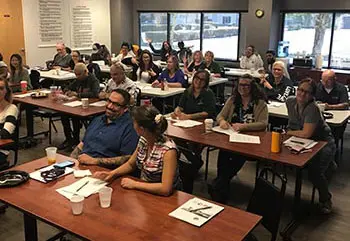
“I think the training went great. You provided a lot of good information that we need.”

Julia Mackey
Director of Admissions

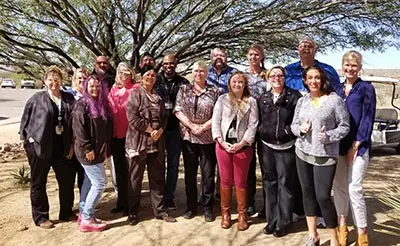
Sierra Tucson, Arizona

“Dr. Cali Estes joins Sierra Tucson to train their entire Recovery Coach 360 Team.”
Crossroads Turning Point, Colorado

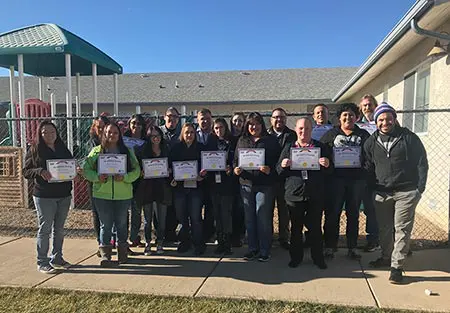
“Amazing training on Harm Reduction and relapse prevention. Cannot wait to have you back next month to teach another class.”
Rob Archuletta
Executive Director
Wynward Way, OC California

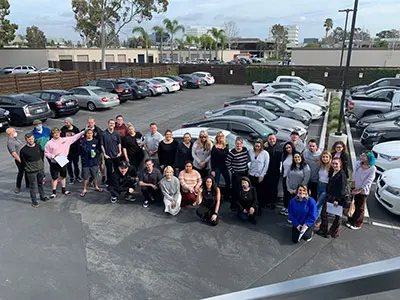
“Very pleased to have Dr. Cali come out and train our staff in AMA/APA block training.”
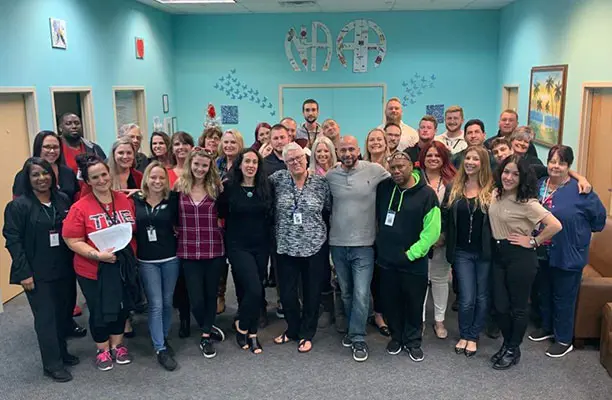
Veronica Waters
Vice President
Just Believe Recovery, PA & Florida

“Dr Cali Estes was a joy to have at our center. We received a lot of amazing feedback from our staff and loved the breakout sessions”
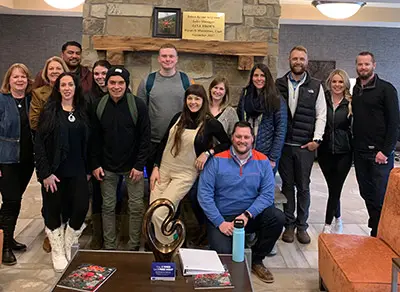
Sinead
Clinical Director
Aqua Recovery Center, Utah

“Dr. Cali has given us the ability to create a new program in Recovery Coaching. This has given us the ability to keep track of our patients while at RTC, and also when they leave. We have seen great success with this program.”
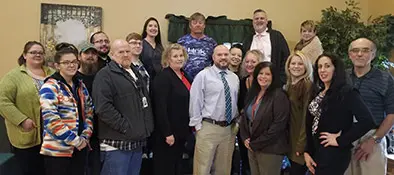
Clint Tolman
Executive Director
St. Joseph's Institute, PA

“We have learned a lot at this training, I am glad you came out and we found you for our staff. You are doing a great job.”

Guy Murray
CEO St. Joseph’s Institute
New Vista Behavioral Health, Avalon Malibu

“Excellent Admissions Call center training with Cali”
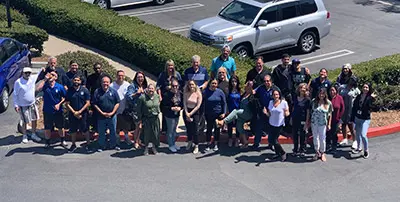
Christine Parker
Marketing Director
Ocean Hills Recovery, California

“Amazing class! We have had Cali out here a few times for training our staff.”
Chris Cannon
Managing Partner
Vanguard Accelerator
Cedar Point Recovery, CA

“Thank you, Dr. Estes. The staff found your training educational and allows them the opportunity to empower themselves with clients.”

Jody M. Ressio
MA, LAADC, Clinical Director
Lakeview Health, Jacksonville, FL

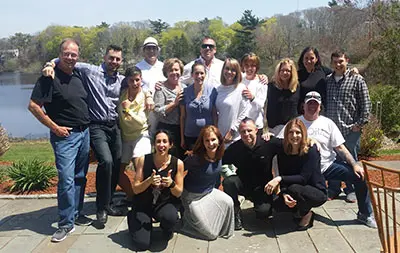
“The training was comprehensive and easy to follow for some employees not as versed in the field of interventions. I would highly recommend Cali and The Addictions Academy to anyone looking to join or excel in the field of Addictions.”
Derek Gwaltney
Vice President
Gosnold on Cape Cod, MA

“Cali Got great feedback about today’s training. Much appreciated.”

Ray Tamasi
CEO

— How It Works —

The Certification Process

Becoming a Certified Narcissist Abuse Coach follows a clear, structured path so you always know exactly what comes next.

01

Enroll & Begin The Training Immediately

Get instant access to the full curriculum and start progressing at your own pace. There are no prerequisites, no waitlists, and no scheduled start dates so you can begin the moment you register.

02

Complete The Course & Take the Certification Exam

Work through the modules, apply what you learn, and graduate with 26 Continuing Education Credits (CEU/CME/CE/Hrs). Once you pass, you are fully certified.

03

Participate in Guided Coaching & Supervision

Join 10 weeks of group coaching led by a master coach, where you'll receive real-time feedback, refine your approach, and build confidence working with real scenarios.

Help POPULATION RESULT With You as Their Coach...

Become the Coach Who Helps People Break Free & Recover from Narcissistic Abuse

- ENROLL NOW -

No application or pre-requisites needed for our certifications. Start your journey with us today!

Nationally Certified Narcissist Abuse Coach

No application or pre-requisites needed for our certifications. Start your journey with us today!

$999

Next Live Group Coaching Call Starts Tuesday @ 10am EST. Self Study Materials Available Immediately Upon Registration

This Program Earns You A Nationally & Internationally Recognized and Accredited Certification In Narcissist Abuse

10 Weeks

OF LIVE GROUP CALLS

26 CEUs

CEUs/CME/CE/Hrs

Self Paced

6 MONTHS ACCESS

No Exam Fee

INCLUDED WITH PRICE

— curriculum —

The Complete Narcissist Abuse Coach Certification Syllabus:

The full course outline is available below. Each module may be expanded to view the sections covered and a summary of what is taught.

01
Orientation, Safety & Professional Identity
Role definition, scope of practice, legal protections, and the Healer's Mindset
Navigating This Course Safely: Titration vs. Flooding
Scope of Practice & The "Legal Shield"
Coaching vs. Clinical Therapy: The No-Diagnosis Rule
The Informed Consent & Coaching Agreement
The DSM-5 Framework: Identifying the Pattern
Behavioral Language: The Coach's Approach
Safety, Risk Assessment & Crisis Intervention
Lethality Screening, Digital Security & The Coach's Protection
When to Refer: Crisis Lines and Psychiatric Consultation
Professional Identity: The Healer's Mindset
Dismantling the Savior Complex & The "Guide on the Side" Philosophy
The Karpman Drama Triangle: Persecutor, Rescuer, Victim, and Coach
Managing Countertransference & Modeling Healthy Boundaries
Trauma-Informed Principles: The 4 R's
The Window of Tolerance
Ethics & Professionalism — Integrity, Humility, Objectivity
Confidentiality, Documentation & HIPAA-Style Privacy Standard
The ethical and professional bedrock of everything that follows. Covers the legal distinction between coaching and therapy, the No-Diagnosis Rule, the complete informed consent framework, lethality screening, and crisis referral protocols. Critically, this chapter dismantles the Savior Complex and introduces the Drama Triangle which are two of the most important self-awareness frameworks for practitioners entering this work. The Window of Tolerance model is introduced here and revisited throughout the course.
02
Understanding Narcissistic Abuse as a Relational Dynamic
Control systems, the abuse cycle, the biology of staying, and the manipulator's toolkit
Narcissism as a Control System: Not a Personality Clash
Healthy Conflict vs. Psychological Abuse
Grandiose vs. Vulnerable (Covert) Narcissistic Patterns
Why Abuse Is Often Invisible: The Public vs. Private Split
The Abuse Cycle: Idealization, Devaluation, Discard, Hoovering
Phase 1: Love Bombing : "The Hook"
Phase 2: Devaluation : "The Sink"
Phase 3: Discard : "The Cut"
Phase 4: Hoovering : "The Recall"
The Cycle Beyond Romance: Family, Friendship & Workplace Dynamics
Intermittent Reinforcement: The Gambler's Logic
Trauma Bonding: The 7 Stages
Psychological Dependency: The Hijacked Nervous System
Key Tactics: Gaslighting, Triangulation, DARVO, Flying Monkeys
The Targeting of Empathy: Why High-Resource Individuals Are Chosen
Cognitive Dissonance & Mental Fog
Reactive Abuse & Internalized Narcissism
The most conceptually dense chapter in the curriculum. Reframes narcissistic abuse from a personality issue to a deliberate relational control system covering the full abuse cycle, the neurobiological mechanics of the trauma bond, and why "just leave" fundamentally misunderstands what is happening. Introduces DARVO (Deny, Attack, Reverse Victim and Offender) as a specific accountability-avoidance tactic, and covers how covert narcissistic patterns are routinely missed by both clients and helpers.
03
Psychological Manipulation & the Coach's Counter-Strategy
Five categories of manipulation each paired with a concrete coaching intervention
Section I: The Distortion of Reality (Internal Tactics)
Gaslighting & Identity Erosion: Teaching Reality Testing & Fact Files
Projection & Blame Shifting: The "Return to Sender" Exercise
Section II: Social Weaponization (External Tactics)
Triangulation & "Divide and Conquer": Coaching Refusal to Compete
Smear Campaigns & Flying Monkeys: Building the Counter-Community
Section III: The Hook and The Cage (Attachment Tactics)
Love Bombing & Future Faking: Vetting for Consistency
Breadcrumbing & Intermittent Reinforcement: Value Assessment
Section IV: Emotional Punishment & Hostage-Taking
The Silent Treatment & Stonewalling: Reclaiming the Silence
Narcissistic Rage & Intimidation: The Exit Protocol & Grey Rocking
Section V: The Coach's Toolkit: Cross-Dynamic Mastery
Contextual Labeling & The Observer Stance
Boundary Customization & Cross-Dynamic Pattern Recognition
What distinguishes this chapter from a standard overview of manipulation tactics is the coaching counter-strategy paired with every tactic, not just identification, but specific intervention tools coaches can use in sessions. The Observer Stance framework moves clients from "target" to "ethnographer" of their own experience and is one of the most clinically useful tools in the course. Cross-dynamic coverage (family, workplace, romantic) is embedded throughout, making this material applicable across the full range of client presentations.
04
Attachment Theory & the Architecture of Vulnerability
Why certain individuals are targeted and the path to earned secure attachment
Attachment as Survival Strategy Not Personality Type
The Four Attachment Styles in Depth
The Fawn Response: The Hidden Fourth Trauma Survival Strategy
Fawning in Childhood as Protection; Fawning in Adulthood as Target
The Anxious-Narcissist "Clinch" — Why This Pairing Is So Common
The Avoidant-Narcissist "Power Struggle"
The Disorganized Mirror: When Chaos Registers as Familiar
Childhood Roots: Conditional Love, The Normalcy Trap, Emotional Neglect
Trauma Bonding vs. Healthy Attachment: The Neurochemical Distinction
The Reactivation Loop: Age-Sliding and Childhood Coping Patterns
Urge Surfing: Coaching Through Trauma Bond Withdrawal
Rebuilding: Reparenting, The Boring Baseline, Earned Security
The Boundary Audit: Closing Entry Points Across All Life Domains
Covers the Fawn response which is the hidden fourth trauma survival strategy, and the one most prevalent in narcissistic abuse survivors. The "Normalcy Trap" (growing up inside a narcissistic system means red flags register as home) is one of the most important insights for coaches who work with adult survivors of childhood narcissistic abuse. Closes with the "Urge Surfing" technique for coaching clients through the withdrawal phase of trauma bond separation.
05
The Survivor Experience & Trauma Impact
C-PTSD, nervous system dysregulation, shame, identity erosion, and why survivors stay
Trauma Bonding: Key Distinctions and Coaching Approach
Cognitive Dissonance & Self-Blame: Why Self-Blame Feels "Safer"
Identity Erosion & Loss of Self: The 4-Stage Progression
Shame, Confusion & Self-Doubt: The Shame-Silence-Doubt Cycle
Complex Trauma (C-PTSD) in Narcissistic Abuse: C-PTSD vs. PTSD
Hypervigilance: Constant Scanning, Anticipatory Fear, Emotional Exhaustion
Emotional Flashbacks: Distinct from Event-Based PTSD Flashbacks
Dissociation & Emotional Shutdown: The Spectrum Response
Nervous System Dysregulation: The Window of Tolerance in Practice
Fight, Flight, Freeze, Fawn: How Survival Responses Become Default Patterns
Why Survivors Struggle to Leave or Stay Away
Matching Coaching Approach to Each Trauma Experience
Answers the question that clients' families consistently ask and that coaches must be equipped to answer: why didn't they just leave? The chapter addresses this with clinical accuracy across the neurobiological, psychological, and practical dimensions. Includes a detailed coaching approach map that matches specific survivor experiences from trauma bonding, to dissociationm to the fawn response, to the appropriate coaching response at each stage.
06
The Recovery Continuum & Identity Reconstruction
Six recovery stages with coaching tools, dangers, and relapse prevention frameworks
Stage 1: Confusion & Self-Doubt — "The Fog" (Fear, Obligation, Guilt)
The "Anchor of Reality" Role — Stabilization Before Truth-Telling
Stage 2: Awareness & Pattern Recognition — The Danger of "The Reveal"
"Quiet Quitting" the Relationship — The Mirror Exercise
Validating Protective Anger — From "Justice" to "Peace"
Stage 3: Processing & Trauma Awareness — Moving from Head to Body
The Flashback Management Protocol
Dealing with the Introjected Critic: "The Narcissist's Script"
Somatic Dysregulation & The "Neuro-Chemical Detox" Reframe
Stage 4: Grief, Anger & Emotional Integration — "The Dark Night of the Soul"
Mourning the Idealized Version, Lost Time, Non-Romantic Bonds
Stage 5: Identity Rebuilding & Personal Agency — "The Phoenix Phase"
Reclaiming Power of Choice — The "Small Wins" Strategy
Values Audit, Somatic Intuition Coaching, Post-Traumatic Growth
Stage 6: Boundaries, Integration & Empowerment — "The Thriver Stage"
Reaching Indifference / The Green Flag Vetting Checklist
Relapse Prevention / The Relapse Toolkit & "Adult Self" Recording
The most practically detailed chapter in the curriculum. Each stage includes specific coaching tools, coaching challenges, the risk of backslide, and concrete language to use. Stage 2 includes the crucial warning about "The Reveal" which is what happens when a client confronts the narcissist with their awareness, and why coaches must prepare clients for that danger. The Relapse Prevention section introduces the "Inconvenient Truth" list and the Adult Self recording — two of the most powerful self-regulation tools in the course.
07
Core Coaching Skills for Survivor Support
Session methodology, trauma-informed language, and the backslide and hoover crisis response
Creating the "Safe Container": A Sustained Relational Stance
Attunement, Reliability, Non-Judgment & Repair
Validation Without Reinforcing Victim Identity
Acknowledge Without Anchoring: Honor Strength Within the Story
Supporting Agency Without Control: The Control Trap
Invite, Don't Instruct / Follow, Don't Lead
Working with Shame, Guilt, and Fear: Distinct Coaching Responses
Coaching the "Backslide" — The Coach's Response Framework
The Hoover Crisis: Staying Neutral, Validating Without Endorsing
Keep the Door Open: Maintaining the Relationship Regardless of Choices
Rebuilding the Internal Compass: Self-Trust & Boundaries as a Developmental Process
Identification, Awareness, Expression & Maintenance of Boundaries
Celebrate Evidence: Normalize Imperfect Progress
The operational core of the certification. The "Safe Container" section goes beyond technique into a sustained relational posture — what coaches must embody consistently, not just during difficult moments. The shame/guilt/fear section distinguishes the three emotional states precisely and provides distinct coaching responses to each. The backslide and hoover crisis coaching framework is among the most practically important content in the course because these moments test the coaching relationship, and most practitioners are not prepared for them.
08
Strategic Disengagement & Protective Measures
No contact, BIFF, Gray Rock, Yellow Rock, legal and financial safety, digital defense
No Contact vs. Low Contact: The Gold Standard and the Real-World Exceptions
The Extinction Burst: Preparing Clients for Escalation
The No Contact Contract: A Personalized Accountability Tool
The B.I.F.F. Response Framework: Brief, Informative, Firm, Friendly (Neutral)
Gray Rock Method: Becoming Uninteresting and Emotionally Unreactive
Yellow Rock Method: Polite But Cold for Legal and Professional Contexts
Practical Examples: Blame-Shifting, Guilt-Tripping, Co-Parenting, HR Meetings
Strategic Safety & Documentation: The Paper Trail
Digital Hygiene Checklist: Passwords, Tracking Apps, Cloud Access, 2FA
The Documentation Log Template: Factual, Neutral, Legally Useful
Workplace Protective Measures: The "Professional Shield"
The "Need-to-Know" Circle: The Vault, Middle Circle, and Outer Ring
Legal & Financial Safety: The Financial "Go Bag"
Vetting Narcissist-Aware Legal Counsel: Understanding DARVO in Court
The Resource Referral Map: Legal, Financial, Tech Security, Safety
Dealing With the Hoover: The Playbook Response and Pre-Decided Protocol
Family & Social Defensive Tactics: The Information Diet
Managing Flying Monkeys: The Broken Record Script, Early Exit Tactic
Digital Stalking & Online Harassment: Documentation and Defense
The most operationally specific chapter in the course and one of the most unique in any coaching certification. Covers Gray Rock and Yellow Rock with real scenario examples across blame-shifting, guilt-tripping, co-parenting emails, and HR meetings. The B.I.F.F. Response Framework is explained and illustrated in practice. The Financial "Go Bag" covers the step-by-step process of building financial independence quietly while still in the relationship. The Need-to-Know Circle framework structures how clients manage information across their entire social ecosystem which is one of the most immediately applicable tools in the curriculum.
09
Special Populations & Advanced Relational Dynamics
Family systems, hidden subtypes, male survivors, faith communities, culture, and comorbidity
The Narcissistic Family System — Roles, Unspoken Rules, Emotional Suppression
Family Roles: Golden Child, Scapegoat, Lost Child, Mascot, Enabler
Intergenerational Transmission of Narcissistic Family Patterns
Specialized Subtypes: Covert, Communal, Malignant, Somatic, Cerebral, Inverted
Why Hidden Subtypes Complicate Recognition and Recovery
Siblings, In-Laws & Group Narcissism — Collusion Without Awareness
Sibling Estrangement as a Grief Process
Workplace and Institutional Narcissism
Male Survivors: Cultural Barriers, Disbelief, Gendered Tactics
Validating Male Survivors: Normalizing Trauma Responses Across Gender
Narcissistic Abuse in Faith Communities: Spiritual Authority as Cover
Narcissistic Abuse in Recovery Communities: Thirteenth-Stepping, Sponsorship Manipulation
Cultural & Community Power Dynamics: Collectivist Culture, Immigration Status
Intersectionality in Abuse Dynamics: What Culturally Competent Coaching Requires
Survivors with Comorbid Challenges: C-PTSD, Addiction, Anxiety, Dissociation
Scope Management with Comorbid Presentations: When to Refer
Covers the client presentations that standard curricula miss entirely. The Communal Narcissist who derives supply from being perceived as exceptionally giving is particularly common and consistently misidentified. The faith community and recovery community sections are essential for any coach working in those contexts: spiritual authority used as cover, confession weaponized, and recovery language deployed to maintain control are all covered in specific detail. The comorbidity section provides practical scope management guidance, not just awareness and what to do.
10
Case Files & Practical Application
Six realistic client scenarios with coaching notes, danger zones, and reflective practice prompts
Case File 1: Early-Stage Survivor in Confusion — Meeting the Client Where They Are
Case File 2: Trauma Bond & Return Cycles — Non-Judgment and Mapping the Pattern
Case File 3: Survivor Experiencing Gaslighting — Perceptual Restoration
Case File 4: High-Conflict Co-Parenting — BIFF, Parallel Parenting, Safety Planning
Case File 5: Long-Term Identity Reconstruction — The Phoenix Phase in Practice
Case File 6: Survivor Navigating Family System Abuse — Roles, Estrangement, Grief
Coaching Notes for Each Case — What to Observe, What to Avoid, What to Do
Reflection Prompts for Supervision and Peer Review
Bridges theory to applied judgment. Each case file presents a realistic scenario with specific presenting language, what the coach is likely to observe, core coaching considerations, and reflection prompts designed for supervision or peer review. The Co-Parenting case is particularly detailed covering BIFF communication, parallel parenting frameworks, documentation strategy, and safety planning in a single scenario. Case files are designed to be used not just once, but returned to repeatedly as practice depth develops.
11
Practice Readiness
Positioning, pricing, intake, client agreements, referral networks, and trauma-informed marketing
Defining Your Niche: Who You Serve and What You Offer
Positioning as a Specialist: Building a Practice Identity
Pricing Ethically: Rate-Setting and Package Design
The Intake Process: Screening, Safety Assessment, and First Session Structure
Session Structure & Package Frameworks
Building Your Professional Referral Network
Scope, Boundaries & Preventing Burnout
Marketing Trauma-Informed Coaching Responsibly
What to Avoid in Survivor-Focused Marketing
Effective Content Formats: Educational Posts, Podcast, Email Nurture
Covers everything between completing the certification and having a functioning practice. Pricing ethics, intake structure, session packaging, and building referral relationships with therapists, legal advocates, and domestic violence organizations. The trauma-informed marketing section is rigorous covering not just what to do but what to avoid, including diagnostic language in marketing copy, urgency-based sales tactics, and graphic content deployed to drive clicks. The principle throughout: your marketing is the first experience a survivor has of your coaching so it should feel like your sessions.
Bonus Workbook Included With Enrollment

Coaching Recovery Blueprint
& Survivor Workbook

A complete 80+ page session resource that serves as two documents in one. Each of the seven phases contains a Coaching Blueprint (session-by-session coach instructions, timing guidance, breakthrough indicators, and how to hold difficult client responses) alongside Survivor Exercises (the client-facing worksheet used within or between sessions). This is the practical companion that bridges everything in the curriculum to actual session work.

Phase 01
Stabilization & Safety
The Foundation: Before healing, the nervous system must feel safe to receive it.
  • Nervous System Regulation (5-4-3-2-1 & the Vagus Nerve Reset)
  • Invisible Abuse Validation: "Nothing Happened… But Everything Did"
  • Public vs. Private Reality: their mask vs. your truth
  • Decision-Making Framework: grounded, self-aligned choices
  • The Best/Worst/Likely Framework: expanding beyond worst-case thinking
  • Crisis Map: Emergency Scenario Planning for real-time encounters
Phase 02
Pattern Recognition
The De-Programming: dismantling the belief that you are the problem.
  • Mapping the Manipulation: the Love Bombing → Devaluation → Discard cycle
  • The Empathy Gap: why "explaining yourself" doesn't work
  • Workplace Reality Check: "Professional or Psychological?"
  • What I Gave vs. What I Got: a visual energy ledger
  • Love Bombing vs. Genuine Interest: building a relationship compass
Phase 03
Unpacking the Roles
The "Who Am I?" Phase: excavating learned rules about love, power, and belonging.
  • Authority Distortion & Fawning: "The Invisible Handcuffs"
  • Obligation vs. Choice: breaking guilt-based compliance
  • Consequence Conditioning: why clients don't speak up
  • Family Loyalty Unpacking: siblings and parents with NPD
  • Deconstructing the "Survival Persona"
  • From Victim to Survivor: reclaiming the narrative
Phase 04
Dismantling the Bond
The Emotional Detachment: treating the trauma bond as the addiction it truly is.
  • Naming the Tactic: from feeling "crazy" to thinking like a detective
  • The Push-Pull Tracker: charting the Hoover & Discard cycle
  • Both Are True: holding the "Good Version" and "Abusive Version" simultaneously
  • Power Reclamation: dissolving fantasy bonding, redirecting hope
  • Emotional Detachment Script: pausing between the feeling and the response
Phase 05
Reclaiming the Inner Compass
The Identity Rebuild: uncovering the self that was buried, not destroyed.
  • Body-Based Intuition: distinguishing instinct from trauma response
  • The Role Exit Strategy: formally resigning from assigned roles
  • The Preference Audit: small choices to find the buried self
  • Rebuilding My Inner Compass: identifying and solidifying core values
  • The Trusted Witness Interview: reconnecting through safe external reflection
Phase 06
Boundary Architecture
The Social Muscle: boundary-setting as a learnable, practiceable skill.
  • Energy & Access Audit: determining who earns your time and headspace
  • The Micro-Boundary Lab: practicing "Low-Stakes No's" first
  • Healthy Interaction Rehearsal: mock conversations where disagreement is safe
  • Setting and Maintaining Boundaries: proactive definition and enforcement
Phase 07
Closure & The Future
The Integrated Self: becoming who you were always capable of being.
  • Reparenting Exercise: providing yourself the validation that was withheld
  • Grieving What Never Existed: mourning the "potential" of the relationship
  • Forgiveness Without Reconciliation: releasing the burden without letting them back in
  • Creating Standards for Future Relationships: written non-negotiables
  • Advanced Future Planning: 1-year and 5-year vision for an autonomous life
80+ Pages
Coach Blueprints
& Survivor Worksheets

Each phase includes session instructions with timing guidance, breakthrough indicators, and specific language for difficult client responses alongside the client-facing worksheet used in or between sessions.

Meet Your Instructor:

Dr. Cali Estes

Founder & CEO

Dr. Cali Estes is a world leader in addiction recovery, mental health, and performance coaching known globally as “The Female Dr. Drew” and “The Battery Recharger.” With over 25 years of experience, she’s helped CEOs, celebrities, athletes, and high-achievers break free from burnout, addiction, and trauma using her no-nonsense, science-backed, results-driven approach.

As founder of The Addictions Academy and Sober On Demand®, Dr. Cali has trained more than 60,000 professionals across 40 countries and created concierge recovery programs trusted by leaders who need change fast. A 6x #1 best-selling author, international speaker, and host of the UnPause Your Life podcast, her work has been featured by CNN, Forbes, People, and FOX.

When you learn from Dr. Cali, you’re learning from someone who has walked through the fire, mastered the tools, and built programs that actually work. She won’t just give you knowledge she’ll show you how to create transformation that lasts.

They didn't stay because they were weak. They stayed because the relationship was engineered to make leaving feel impossible — and your job is to understand exactly how that works.
From the NCNAC Curriculum  ·  Chapter Two

— Self-Paced Online Certification —

Here's Everything You Get When You Enroll Today:

Nationally Certified Narcissist Abuse Coach · Counts Towards 26 CEU/CME/CE/Hrs

normally: $2,999

total value: $7,999+

Special Offer: $999

One-time payment · 6mo access · No additional fees

— Self-Paced Online Certification —

Here's Everything You Get When You Enroll Today:

Nationally Certified Narcissist Abuse Coach · Counts Towards 26 CEU/CME/CE/Hrs

  • 12 Video Training Sessions Led By Dr. Cali Estes

  • Narcissist Abuse Coach Training Manual (100+ Pages)

  • Narcissist Abuse Coaching Blueprint & Survivor Workbook

  • 10 Weeks of Live Group Mentorship with a Master Coach

  • Additional Ethics Course (Bonus 6 CEUs)

  • End-of-Program Examination & Credentialing

  • Marketing Seals + Use of NCNAC Designation

  • 6 Months of On-Demand Access

  • Recovery Coach Workbook (#1 Best Seller On Amazon)

  • Private Graduate & Networking Communities

  • Up To 50% Off Discounts on All Future Certifications

normally: $2,999

total value: $7,999+

Special Offer: $999

One-time payment · Lifetime access · No additional fees

Next Live Group Coaching Call Starts Tuesday @ 10am EST. Self Study Materials Available Immediately Upon Registration

— still have questions? —

Frequently Asked Questions

Or you can call us at 1-800-706-0318 ext 2 | Text us at 323-274-1840 | Email us at [email protected]

What Is A Narcissist Abuse Coach?

A Narcissist Abuse Coach is a trained professional who helps clients recognize, escape, and recover from the damaging effects of toxic and narcissistic relationships. Unlike therapists, who diagnose and treat mental health disorders, a Narcissist Abuse Coach focuses on practical strategies, boundary-setting, and rebuilding self-confidence so clients can move forward with clarity and strength. These coaches understand the cycle of narcissistic abuse—love bombing, gaslighting, blame-shifting, devaluation, and discard—and provide tools to break the pattern for good. Whether the client is leaving a partner, navigating a narcissistic boss, or healing family wounds, a Narcissist Abuse Coach serves as a guide, advocate, and accountability partner for creating a healthier, more empowered life.

Do I need a degree or prior experience to enroll?

No. There are no prerequisites, degrees, or licenses required to enroll in the Narcissist Abuse Coach Certification. This program is designed to be accessible whether you’re brand new to the field, already working in recovery or mental health, or looking to add a specialized niche to your coaching practice. Once you complete the training, you’ll be recognized as a Nationally Certified Narcissist Abuse Coach (NCNAC)—a credential that demonstrates specialized training and sets you apart in a rapidly growing field.

How much can I earn as a Certified Narcissist Abuse Coach?

Your earning potential depends on how you structure your practice, but most certified coaches in this niche charge $100–$250 per session or package their services into programs ranging from $1,500–$5,000+. Because narcissistic abuse is such a specialized and high-demand area, clients are willing to invest in coaches who understand their pain and can guide them through recovery. Many graduates earn back their entire $999 training investment with their very first client, and as you build your reputation, you can add group coaching, workshops, or even online courses to create multiple income streams. This certification positions you in a fast-growing niche where both private clients and treatment centers are actively looking for experts with exactly these skills.

Will this certification help me if I already work in a treatment center or clinical setting?

Absolutely. This certification is designed to complement, not replace, the skills you already use in a treatment or clinical environment. While clinicians focus on diagnosis and therapy, a Narcissist Abuse Coach adds an entirely different layer of value—practical tools, boundary-setting strategies, and recovery frameworks specific to narcissistic abuse. These skills can make you more effective with clients who are caught in toxic relationship cycles and give your center an added credential that sets you apart. Many treatment facilities now look for staff with specialized coaching certifications because it strengthens client outcomes and demonstrates a commitment to cutting-edge care.

Why would someone choose a coach instead of a therapist?

A therapist diagnoses and treats mental health disorders. A Narcissist Abuse Coach fills a completely different gap: they provide action-oriented strategies, accountability, and forward-focused tools that help clients break free from toxic relationship cycles and rebuild their lives. Clients often choose a coach when they want practical guidance without the stigma of therapy. Coaches don’t replace therapy, they bridge the gap between both, giving clients the structure, strategies, and confidence to move forward right now.

How long does it take to complete the program?

The Narcissist Abuse Coach Certification is designed to be completed quickly and efficiently without sacrificing depth. You’ll get a comprehensive 100+ page manual to study at your own pace, plus a 12 training videos led by Dr. Cali Estes with 6 months of replay access. Most students are ready to sit for the exam and earn their certification within 2–4 weeks, though you’ll have ongoing access to the materials for refreshers anytime. That means you can start learning immediately, certify in under a month, and begin offering services as a Narcissist Abuse Coach right away. We also offer an additional 10 weeks of live weekly supervision calls but you can obtain your certification prior to attending.

The World’s Premier Training Institute for Mental Health & Addiction Professional Development.

The Addictions Academy Ⓡ

Terms & Conditions | Privacy Policy | SMS Policy

2046 Treasure Coast Pkwy Unit A, #207 Vero Beach FL 32960

Quick Links